
Introduction
It is claimed that family life is a reassuring and a sense of belonging even though one might go through complex duties that affect emotional and physical health. There are only a few situations that are not influenced by parenting pressures and caregiving activities, communication problems and time limitation, which are only some of the situations that influence the day-to-day wellbeing in families. Family wellbeing does not mean the building of a perfect house, but the building of the atmosphere, where each member will feel supported, understood and appreciated.
The mundane issues are made less difficult to solve with the consideration of family wellbeing. Stress is not to be carried alone, the problems are solved in a respectful way and the habitual pattern provides an individual with the sense of stability. This way, the health and emotions of each of the family members are defined as an interdependence, translating to the fact that the well-being of a particular person is prone to the well-being of the entire family.
This guide talks about family wellbeing as a convenient and compassionate move towards the family care. It is also committed to effective actions that would improve emotional engagement, foster healthy lifestyle, and offer a domestic environment that every individual can grow. These tips are targeted at the long term wellbeing as someone who cares is a parent, so is a member of the family that seeks balance.
Family Wellbeing and its Significance.
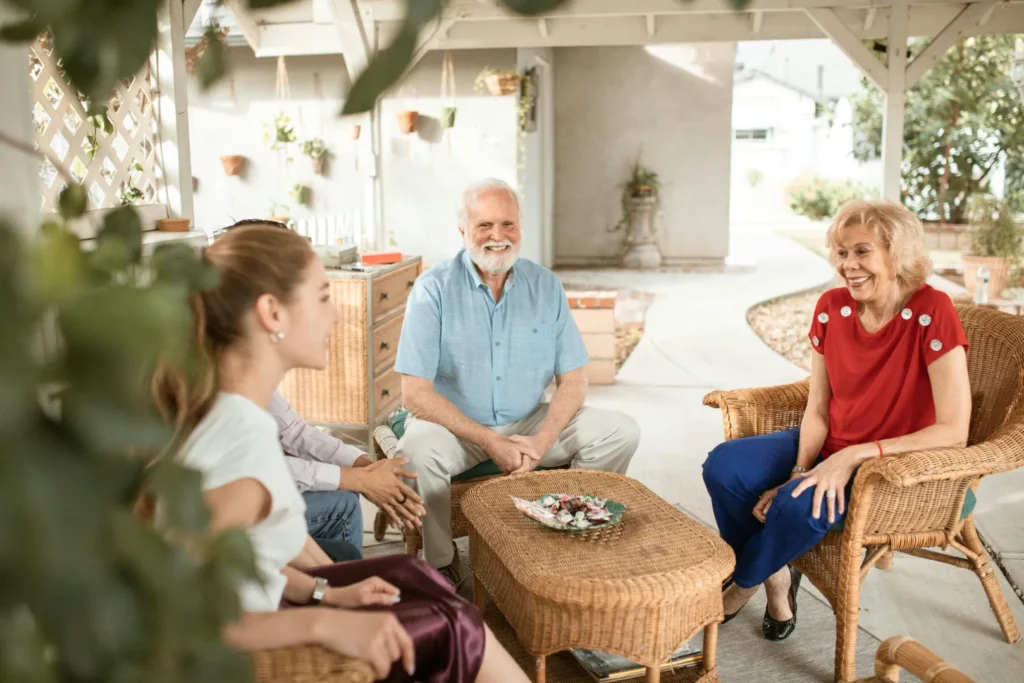
The wellbeing of the Family is merely wellbeing of a household both emotionally, physically and socially. It involves communication process, stress management between the family members, a process of supporting one another and adapting to the new changes. The focus on the wellbeing of the family members would prevent burnout, resentment, and emotional alienation which can take place when a person is overwhelmed with responsibilities.
Healthy family wellbeing contributes towards the development of an individual at any process of life. The children are provided with emotional security and stability and the adults are less pressured and stronger. By having their needs addressed, the elderly feel that they are important. This similarity eases the relationship of trust and cooperation between generations.
Family wellbeing encourages active health care rather than reactive one to the concerns as they arise. This may be regular visitations, collective engagements or even basic routine practices that unite. They can in the long run develop positive family culture which can address any problem with greater confidence and empathy.
The Communication as the Block of Family Care.
The family wellbeing is based on open and respectful communication. When heard, family members have reduced chances of being misconstrued and their emotional security is improved. Communication does not only entail resolution of a conflict by itself but also sharing of experiences, feelings and appreciation on a regular basis.
Effective communication involves not talking over each other; telling the truth and not accusing. The practices help the family members to be aware of the opinions and needs of the other members. When a family does not reserve communication to the time of tension, then wellbeing of the family is improved.
Families, focusing on the role of communication, can easily cope with the changes, such as new routines, health problems, or the transformation of the responsibilities. It is a flexible and removes the pressure, which fosters trust and communication is a formidable tool of family care in the long-run.
Creating Healthy Family Patterns.
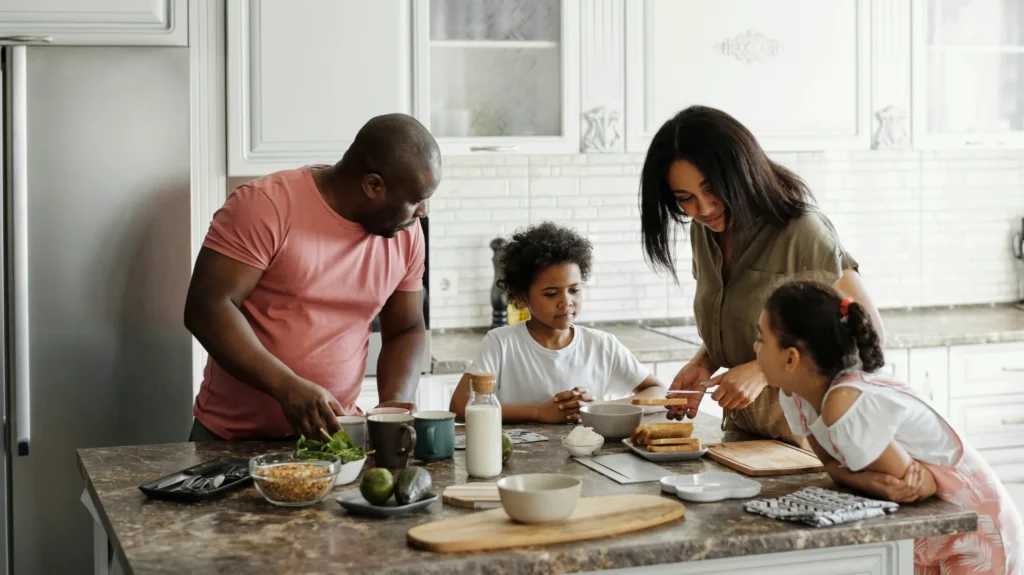
Family wellbeing requires structures and predictability which are observed in the daily activities. Meal schedules, sleep patterns and habitual activities also help in regulating stress and giving one a sense of security. These routines cannot be rigid, though they have to reflect the needs and values of the family.
Poor lifestyle choices are not conducive to physical health because they demand regular meals, sleep, and physical exercise. They also facilitate emotional wellbeing through creating bondage and rest. Even the humble habits such as family dinners or evening reception can be added to otherwise busy lives.
Easy, accommodative schedules can harmonize and adapt the personal interests. Once the routines are rethought and adjusted to the new realities, the family wellbeing will increase and these routines will not be constraining, but supportive.
Familial Emotional Support.
Emotional support is one of the family wellbeing aspects. This involves the understanding of emotions, consoling during the moments of difficulty and rejoicing victories on the way. The accumulation of emotional support is of bonding and also makes the family members feel safe and valued.
The situation that is being affected by the vulnerable is acceptable by the families that exercise emotional support. This openness will create an impetus of honesty and reduce the chances of subdued feelings developing into conflict. Feelings should be treated with empathy and not dismissed and family health blossoms.
The modeling of healthy coping mechanisms is also included in the offer of emotional support. Calmly solving problems and taking care of oneself, as exhibited by the adults, assists children and the rest of the family members to learn to manage their emotions in a more efficient manner. This emotional intelligence is a good attribute to the entire house.
Striking a balance between Bearing Responsibilities.
The aspect of care giving has played a very important role in the family life whether it is the care given to children or to other family members who are old as well as the family members who are medically challenged. The experience of care giving can be very rewarding but can also be exhausting physically and emotionally. To assist in the wellbeing of the families, the needs should be identified and met to attend to the needs of the caregivers.
Managing the tasks, getting support, and setting realistic objectives reduces the pressure of the caregiver. When the care giving is a shared responsibility in a family, then one individual is not placed with the burden of care giving. This reciprocal obligation creates a nurturer and a nurtured person.
Self-care is not a luxury, but a necessity to caregivers. This improves the wellbeing of the family since the caregivers are given time to rejuvenate, do what makes them happy and maintain social relationships. The care-givers are assisted with an aim of ensuring long-term care and increased family health.
Physical Health: Health Promotion in Family.
Physical health is more interrelated with family wellbeing. All these health habits of eating, exercise, and sleep are combined to give energy and spirits. Such habits are streamlined where the family works together when it is concerned with their physical health.
The family activities such as walks, home-cooked meals and outdoor playing are some of the activities that facilitate the participation and connection. It is these shared experiences that lead to stronger relations and promote the physical wellbeing. The family wellbeing would be improved since health would be more of collective role than an individual task.
Good environments are also guaranteed to promote physical health. Stocking healthy foods, not spending excessive time in front of screens, actively playing are a few of the items that contribute to healthy decision-making. As time goes by, this culture turns out to become a family culture.
Stress Management at the Family Level.
Stress is not a bad thing but when it is not handled, it can cause a strain on relationships in the family. Family wellbeing entails the development of communal strategies of coping with stress. It can consist of uninhibited discussions about stressors, relaxation exercises or shared problem-solving.
Families that react to stress in an open channel lessen the impact of stress. The members of the family are no longer isolated when stress is no longer denied but rather discussed. The level of stress enhances family wellbeing because family must work together in addressing the stress as a problem and not as a personal weakness.
Simple steps such as mindful breathing, time to be quiet or laugh with each other are some of the basic ways of coping with stress. These relieves will strengthen emotions and the family will not forget the hard times in a bad way.
Building Family Resilience.
Resilience is described as the ability to adapt and recover after minor misfortunes and family support also plays a significant role in it. Family wellbeing fosters resilience by continuously supporting, reassuring and advising when there is uncertainty.
These families which insist on problem-solving and avoiding blaming also enable the members to acquire confidence and self-reliance. This parenting style instills in life skills that are valuable and develops on the basis of trust. The challenges are seen as an opportunity to expand, and family wellbeing is enhanced.
Being hopeful and having a perspective is another attribute of resilience. Families cultivate the sense of collective strength that will support the long-term wellbeing with the assistance of the realization of small victories and understanding what is wrong.
The Reason to be Inspirational of the Personal Development within the Family.
Family wellbeing recognizes individuals and promotes connectedness. All the family members are different, and they possess their interests, needs and goals that must be taken into account. The encouragement of person development will result in a more sound and balanced family.
Education and promotion of personal interest will help the members of the family to attain confidence and satisfaction. When a person is allowed to be himself rather than suing to fit into the crowd the wellbeing of the family becomes better.
At the same time, connectedness will not lead to isolation by being an outcome of independence. In cases where families create a balance between individualism and shared values, they will have supportive and free environments to all.
Boundaries and Conflict Resolution.
Discordancy is inevitable in the family life and how the same is handled has far reaching impacts on the wellbeing of the families. Healthy conflict resolution implies an understandable and respectful communication, listening, and focus on solutions rather than blame.
Boundaries can be used to achieve emotional safety and respect. Boundaries help the family members to understand what is expected and not expected reducing the resentment and misunderstanding. Boundaries should be clear and never to be crossed, better said than told, and this has a positive impact on the wellbeing of families.
Relationships are positively supported by the skill of conflict solving. As time passes, the family will be more confident in the manner in which settling disagreements is to be achieved amicably which reinforces confidence and emotional safety.
Shared Values and their contribution to Family Wellbeing.
Values come in handy in providing a sense of course and direction in a family. These norms guide opinions, actions and preferences. Through the communication and expression of values in day to day living, wellbeing of the family is enhanced.
The values that help in the establishment of the family culture include kindness, honesty, respect and responsibility among others. The relations become more valuable and unified when the relations are founded on the same values of the members of the family.
Rediscovery of the values every now and then allows the couples to transform as the circumstances shift. This flexibility has ensured that values are up to date and contributing to long term family wellbeing.

Conclusion
Family wellbeing is an ongoing practice, which is prone to change and transformation with time, experiences and changing needs. The families could create the conditions that lead to the individual and mutual well-being through the consideration of communication, emotional support, good habits, and shared responsibility. This style puts emphasis on caring, relationship and balance rather than perfection.
In cases where families invest in wellbeing, they become resilient and can overcome hardship and transition. The seemingly simple, humble measures can make the most impact on it, not only in the daily life, but also in the long run. Tolerance, empathy and collective action bring family happiness.
The reader can visit the helpful materials and family-oriented articles on the Care My World to obtain more advice on how to promote the health of the family. These praises can be part of the strategies that will be discussed in the current paper and may also provide continuous support to the establishment of more healthy and connected families.
Lastly, family wellbeing is the provision of an environment that the members feel valued, supported, and enabled. A family can also improve their relationship through care and will so that they may achieve a sense of wellbeing that will be sustainable and a gain to everyone.

