
Introduction
Stress has been such an unwanted element in the life of most people that it has sneaked into the day-to-day lifestyle, the way people react and the wellbeing in the long run. Although a healthy portion of stress can make one get going, sustained stress in the absence of a rest will usually leave the individual on toes hence making them weary, furious and uncontrollable. Calm resilience does not mean that one would not experience stress, but has the ability to deal with it transparently, steadily and understanding of oneself to make sure that it would cease to rule in their daily life henceforth.
The calm resilience is also concerned with the inner settlement that would enable you to be in a position to cope with the issues and not to be engulfed by them. This is not the impulsive reaction or the emotional inhibition, which suppresses instead of the deliberation responses that defend both the mental and the physical health. The drilling preparation in the art of enduring stress peacefully will render it a manageable feature that will not dictate what you are undertaking and the quantity of energy you have and your mood.
This paper will discuss calm resilience as a realistic, real-life and stress reliever technique, which can be feasible in life. You will get to know how to interpret the impact of stress which affects the body and mind, how the daily routine can or cannot be able to create a balance in the emotional state and how the simplest changes can lead to a stable sense of calmness. The plans should be affordable, enabling, and sustainable to the people who would expect that they could easily cope with stress relieving it and preventing stress-related diseases connected with the condition.
What is Stress and What Is its Effect on our Everyday life.
Stress also has a tendency of starting as an outcome of the perceived needs or threats, be it work pressure, family needs, financial issues, or health issues. Once the brain has been signaled regarding a particular stressor it triggers a set up of physical defense against yourself. In the long term, however, insufficiency of rest as a result of constant stimulation may lead to sleeping, digestive, concentration, and emotional regulation disturbances and thus render stress appear irreversible and uncontrollable.
The extent of the contribution of stress as one of the important variables in the everyday behavior is underrated by the majority. It may interfere with decision making, communication, patience and self esteem. The long term effects of chronic stress are the social withdrawal, lack of motivation or adoption of unhealthy coping mechanisms of stress like over eating or distraction. The tranquility of such patterns is disrupted by troubled calmness through building consciousness of determinants and reactions that result in stress.
It is not the radical transformation of the way of life to evolve profound serene strength in it. It begins with the recognition of the stress signals at a very tender age and the actions are undertaken with specific actions. This can be either through stopping to think and making expectations or laying more emphasis on recoveries. These minor steps in the long-run lead to the decrease in the extent of stress reactions and by this, a decreased negative affective state.
The Body Mind Relationship to Stress Relief.
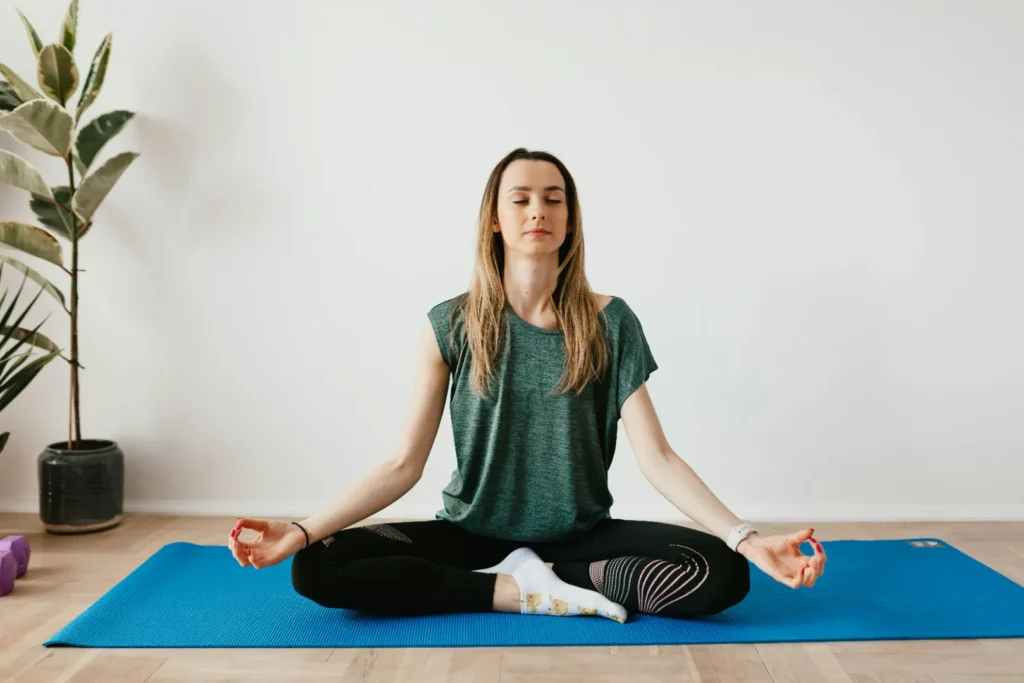
Stress experience is not confined to the mind and this is carried over to the body. The tightness of the muscles, shallow breathing, headache, and fatigue are the conditions of the increased level of stress that can be seen physically. Atmospheric resilience acknowledges this linkage and uses physical sensible as an emotional restriction mechanism. As the body relaxes the mind also relaxes.
The mindful breathing, light movement and the posture awareness are some of the practices that may be of great help in the minimization of the stress levels. And these movements give a message to the nervous system that all is well and therefore it helps in getting the body out of the always awake state. Meditative power triggers daily physical senses of impressions so as to detect stress before it is channeled towards overwhelming.
The emotional stability is enhanced through strengthening the mind-body relation with time. People who apply silent strength will simply complain that they feel on the floor, and they are here and able to solve challenging situations. This is not a method that is based on reduction of stress but the conditions under which the relaxed condition is realized naturally.

The Everyday Habits to live a Resilient Life.
The daily practices contribute to the determination of the stress level. The state of the body is affected to the pressure by sleep, nutrition, hydration, and movement. Tranquil endurance is developed in case such elementary needs are addressed in a systematic way instead of being additional or secondary to the productivity.
The simplest routine including regular sleep and eating healthy meals and short movement breaks during the day also controls the stress hormones. These behaviors can be seen as normal but when pooled together they will make a great difference on the emotional status. The perfection of calm and the power of calmness is founded on a steady way.
The psychological habits such as how one handles himself when in stressful conditions are also necessary. Using the replacement of self-criticism with positive internal communication eliminates the emotional stress. The habits help to develop the sense of security within the internal environment in the long run, which helps to cope with the stress.
Affective Perception and Emotional Management.
One of the coping activities that the majority of individuals strive to cope with stress is the suppression of emotions or the rejection of pain. This could be a short term solution but unresolved emotions would tend to be more expressed intensively. One of the factors of stress reduction that the calm resilience is worried about is emotional awareness. This is because the lack of judgment and feeling ability causes them to occur without consideration.
Being conscious of the feelings is to be able to observe the way you feel, name it, know how it got there. This will help the individual to eliminate the emotional muddiness and avoid the accumulation of stress on the low profile. The tranquility increases the urge to find feelings other than confrontations as people act rationally and not avoid vengeance.
Once the emotional awareness is implemented in the daily life, stress does not play a huge role anymore. Individuals will be in a better position to establish boundaries and define what is good and what is not based on their wellbeing. The practice will help build more healthy relationships and have a more powerful feeling of control over the person.
The Stress Minimization and the Indemnities.
The lack or ambiguity of boundaries can be the cause of constant stress. As soon as people make too many promises, forget about the personal needs or say no, the stress load is rapidly increasing. The serene fortitude involves having powers to create boundaries that should not damage the relations, but conceal the energy.
The separation and dogmatism, about which the boundaries are not, is the question of brevity and honor. Non-violent endurance fosters authentic expression of restraint, expectation and accessibility. This minimizes resentment and burnout at any particular time due to overextension.
Delimiting is a distasteful habit particularly during the initial phases particularly among the care givers or individuals that have been conditioned to prioritize care over self. The boundaries however are rather a reverence to self over time and can help one remain emotionally stable. This is a necessary change that must be incorporated in sustainable stress alleviation.
Reconceptualization in regards to mind and thoughts.
Rigid thinking patterns like catastrophizing, perfectionist or all-or-nothing thought patterns are likely to play a part in causing stress. Relaxed steadfastness should be about struggling with such patterns on a relatively mild level and substituting them with less judgmental perceptions. The process does not contradict the challenges in any sense but puts them in a larger not so problematic context.
As part of mental reframing, some of the aspects can be asking whether a situation will count in the long run or something that can be regulated. All these unsophisticated modifications suppress the level of emotions and expand the ability to resolve issues. It is a byproduct of peaceful perseverance which occurs when thoughts are transformed into a tool and no longer pressurizing.
Reframing becomes unconscious and one is able to react to a stressful situation with considerable ease with time. The ability to be cognitively flexible is one of the pillars of sustainable stress relief and emotional stability.
Recovery and Rest as Necessary Stress Management come in handy.
The contemporary society is biased to demonstrate Rest as a non-productive or hedonistic person. This fact is contradicted by the peaceful stability, which acknowledges rest as one of the basic needs of the mental health. Stress either accumulates with or without a right after the following up.
Sleep is not the only thing in the rest. It is made up of the dots of psychological quietness, the sensorial rest and the replenishment of emotions. The examples of the activities that can help to restore the nervous system are the time in nature, creative activities, or sitting and not being entertained.
As soon as rest becomes a priority in mission, people will be able to enrich a sound personality and minimize their route to stress. This will offer a balance and avoid burnout particularly to that group of people who are busy with a schedule or a duty to attend to.
Social Bond and Provisional Emotional Support.
The interdependence in human plays an important role in the management of stress. The reassurance, perspective and the sense of belonging are the buffering to stress, which the supportive relationship offers. Calm resilience means creating and maintaining good relations rather than being alone throughout the issues.
Through open communication, experiences and knowledge the emotional load is minimized. Even short messages can promote mood and stress resilience. The resort to outreach and not solitude is due to stability and relaxation.
The second part of healthy social support is the opportunity to decide in the relations on the level of respect to the boundaries and emotional requirements. These friendships are rather a permanent source of comfort and guarantee of time passing by.
Finding the Long-run Stress-Avoidance of Composure.
Stress relief is not only about responding to the pressure which exists but also avoiding overloading in further. The process of relaxation leads to the formation of good habits which lessen the level of stress in the long run. This involves day to day self examination, aspirations and life change that can be used to support wellbeing.
It could be prevented through making schedules simple, reviewing priorities or gradual adjustment to work and home environment. It is one of the skills acquired when the life is established to permit calmness in a process demanding to the extent of becoming urgency.
People address the problem of emotional wellbeing through a long-term approach of coping with stress issues as opposed to easy coping approaches to deal with the problem. It is a long term vision that is crucial in making sure that one can be calm and adamant when confronted by the dynamics of life.

Conclusion
Composure strength is a sympathetic and peaceful approach to stress, which acknowledges the prevailing overwhelmingness of life in the modern world. Instead of being stress free, it teaches people how to be conscious, balanced and honorable towards oneself. This will make stress to be an unbearable experience to a bearable one.
Emotional intelligence, limits and rest, composure resilience assists in alleviating the stress now and in future with the refusal to do what you want to do on a daily basis. The practices are inexpensive and versatile, and the implication of the same is that, individuals, families, and caregivers experiencing various issues can apply them.
In case the reader is willing to gain a bit more feedback of emotional wellbeing and daily balance, it might be helpful to find some similar choices in Care My World. Articles about mental wellness, self-care, and family balance are supportive of values of patient calmness resilience and complementary to healthy stress management process.
Once resilience has seated down to calmness, one cannot overcome thoughts and acts of stress. Patience and consistency may then enable one to construct it more on an emotional base that will serve well enough to endure good health, good thinking as well as contentation in all aspects of life.

